
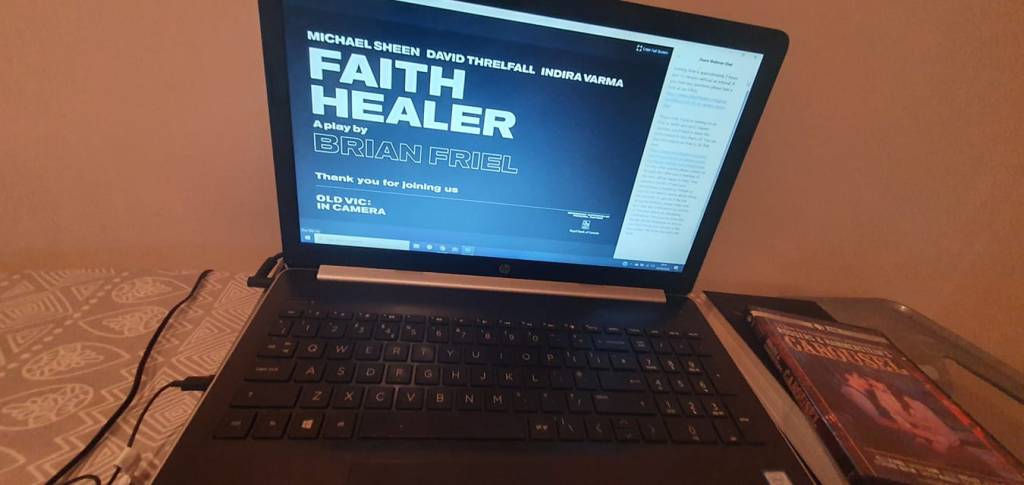
As a theatre fan, lockdown and the pandemic has shown me time and again how much I love and miss the arts industry. It’s where I found my tribe – friends who I share shows with, people whom I admire and love supporting. It gives me a sense of fulfilment where I’m struggling to find it in other aspects of my life – still unemployed, the day to day challenges I have to deal with as a disabled person, and so on. Being away from that community has been incredibly hard, as I’m sure it is for all of us involved – fans like myself and those who work in the arts as a career. Interestingly, this entire situation has developed my relationship with theatre in the sense that I’m trying to expose myself to productions I wouldn’t necessarily choose to see, and I’ve definitely noticed a shift away from musical theatre to plays.
I don’t mind admitting that, aside from Shakespeare, my knowledge of and exposure to plays isn’t what it could be, though of course there are a couple beyond the bard I really love and enjoy. That in mind, I’m delighted, though of course being me, always late to the party, to have finally seen my first Old Vic in Camera production: Brian Friel’s Faith Healer.
“The Fantastic Francis Hardy”, his wife (or mistress with an alias, depending on the locale) Grace and Frank’s manager Teddy travel to remote corners of Wales, Ireland and beyond armed with a record of Fred Astaire’s “The Way You Look Tonight” ready to offer Frank’s gift of healing to those in need. The question is, is his gift real – or is it all a con? That tension and question hangs over the play, as through the course of four overlapping monologues: Frank, Grace, Teddy round to Frank again, we are confronted with the question of who do we believe, what shapes our identity, and the slippery nature of remembrance.
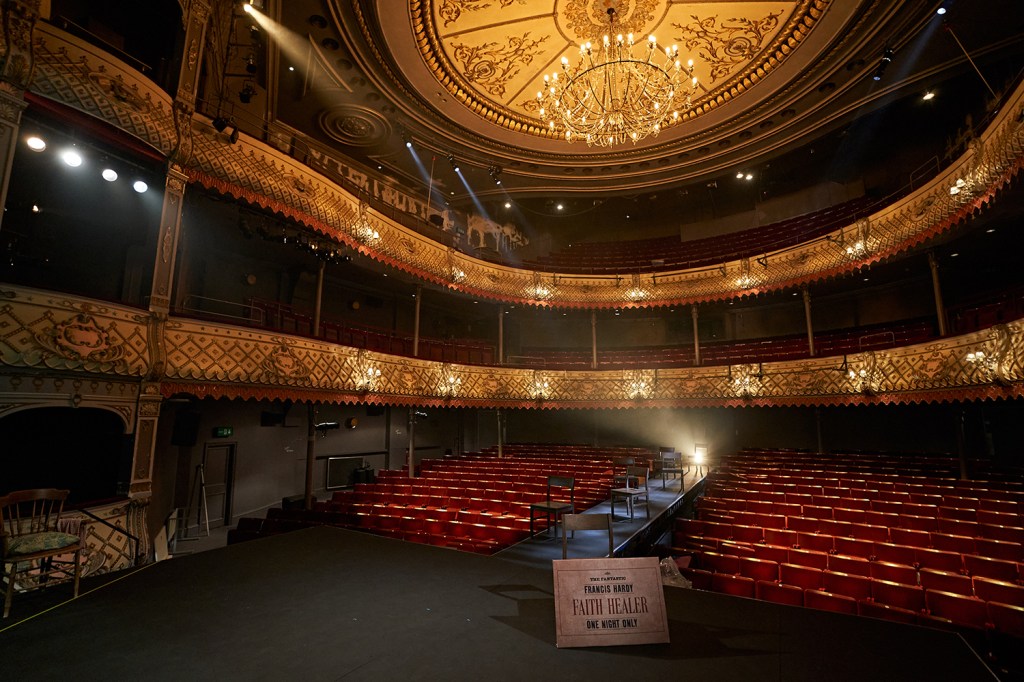
As a newcomer to Friel’s writing: what struck me first was that it’s crammed with words – you really have to concentrate as the pieces click into place. Slowly, I noticed that each character told similar events differently, and that the discrepancies creeped into darker territory. It took me a while to settle in to the density, but I gradually found my rhythm and revelled in the tension – strange how the more difficult it became to believe these characters, the more I wanted to. It’s immensely powerful, sharp and difficult writing, yet I was also drawn in to Friel’s style – there’s a wonderful sense of movement in the play – endless driving, dancing, wedding parties and tales of showbiz, but that’s punctuated by an undercurrent of stillness, reflection and being trapped by one’s pain; to be able to marry the two in the way Friel does is really clever and Matthew Warchus’s direction throws it into even sharper focus. From a design point of view, there’s a beautifully haunting quality to proceedings in the lighting (Tim Lutkin and Sarah Brown), amplified by Frank’s rattling off a litany of villages, Michael Sheen’s voice booming around the empty auditorium. More than once, I had a pronounced tingling up the spine!
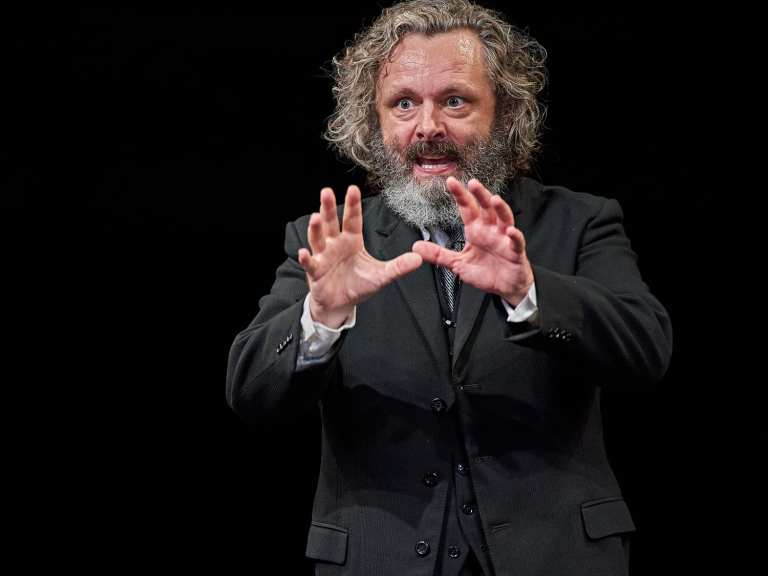
Frank prides himself on his ability to heal – lame legs, bent fingers and all manner of physical ailments, but what’s striking about his character is that his own sense of self is damaged, and he’s become bitter and cynical from life on the road, and he and Grace argue heatedly. Michael Sheen, wild haired and all frantic energy, plays these contradictions beautifully, there were moments when I was so swept up in the way Friel’s words poured out of him so easily that I was hyperaware of wanting to keep still and quiet lest I miss a word, an inflection or a movement. It’s mesmerising!
From Frank’s existential musings, we move to Grace, who is battling with her own trauma and trying to reconcile her decisions and what I took as a loss of her sense of self identity outside of a man who constantly belittles her. Indira Varma has always impressed me whenever I’ve seen her onstage (twice to date) and here is no exception. Grace is embittered and fragile – there’s a tremendous sense that she must tell us her story and of her pain, and that if she stops speaking, she’ll break. Knowing Indira onstage as I do for very different roles tonally to this one- it was wonderful to see her show another side.
David Threlfall’s Teddy is charming in his comic relief, harking back to the time of “Dear Laurence” and his other famous client, a dog who plays the bagpipes, guzzling beer. Ever the optimist and to some extent, the glue that holds Frank & Grace together, from him it feels like we may be getting something close to the truth, but that nagging sensation of disbelief is always simmering away. Threlfall makes every nuance speak volumes, quietly spoken, wiping misty eyes and belching with razor sharp precision.
I came away emotionally spent, but richer for having been introduced to an amazing piece of writing. I’m indebted to the Old Vic for such an intense and moving experience – I’d forgotten for those two hours that I was at home, and not in the room with them, and during this uncertain time, I’ll grab that magical feeling with both hands.
 Wheelie Stagey