
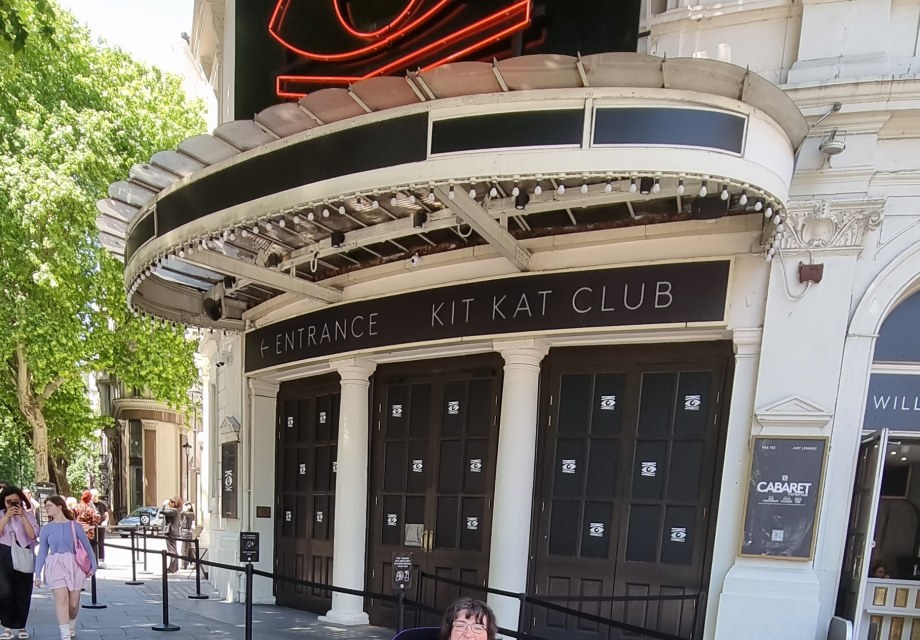
Every musical theatre fan has composers, scores and shows that they consider favourites and they hold dear to their hearts. Of course, I’m no exception to the rule, but what fascinates me is the relationship I have with those that fall off my radar, that come and go from my life but each time they return in whatever shape or form that is, I’m reminded what great scores I think they have.
Kander & Ebb’s 1966 musical Cabaret is one such beast for me. I first saw the show on a UK tour back in 2008, starring Samantha Barks and Wayne Sleep. It’s been so long that I can’t recall the production as a whole with any kind of clarity unfortunately, but I’m confident Samantha was amazing (as she ever is) and it was brilliant to piece the songs together in context with the story, having heard “Cabaret”, “Maybe This Time”, “Mein Herr” and “If You Could See Her” here and there.
Six years later, during my once in a lifetime trip to New York, we had the privilege of seeing the acclaimed revival of Sam Mendes’ production starring Alan Cumming at Studio 54. I have much more vivid memories of and joys associated with this production: as a fan of Alan’s it was amazing to be able to watch him work in person, I was introduced to the marvellous Danny Burstein, and revelled simply in seeing a different vision for the piece that stayed with me for longer & more intensely. That being said, memorable though this experience with the show was for those and a raft of other reasons, I still feel that it was the individual performances I connected more with, rather than the experience as a whole, and found that I didn’t really learn anything new about the piece and what it explores that changed the way I looked at it.
That in mind then, when a new production was announced at the newly transformed Kit Kat Club otherwise known as London’s Playhouse theatre starring Eddie Redmayne & Jessie Buckley, I was intrigued but given the buzz around the casting and the fact I only have a single seating option, I held off and decided to wait for cast change. From where I was, this turned out to be an incredibly exciting move, as two familiar faces stepped into the Emcee’s and Sally’s shoes!
Based on Joseph Van Druten’s 1951 play I Am A Camera which was in turn influenced by Christopher Isherwood’s 1939 semi autobiographical novel Goodbye To Berlin, Cabaret tells the story of an American writer Clifford Bradshaw who comes to Berlin seeking inspiration to write his book. He becomes intoxicated by the lure of the Kit Kat Club and its star, Sally Bowles. The Kit Kat Club & its Emcee welcome you all, irrespective of your deepest desires, allowing it to become a place of freedom & self expression. Outside the club however, the world as we know it is changing forever as the shadow of the Nazi party looms ever larger, which also has ramifications for Fraulein Schneider, the German woman who owns the boarding house where Cliff is living and her budding romance with Herr Schultz, a Jewish fruit vendor…
I think a huge part of the success of this production for me is that I finally connected with it in terms of its historical context infinitely more deeply than I have previously. So much of the imagery in terms of the design and directorial choices will stay with me and helped reinforce that idea, and I think coming at it from a contemporary lens in light of everything going on in the world today made it even more humbling. Rebecca Frecknall’s Cabaret feels raw, visceral and perhaps more timely now than it’s ever been.
The experience starts the moment you enter the building as the Prologue company entertain whilst you wait for the house to open. Dancing to a glorious mix of accordion, violin & clarinet music, what’s so immediately evident is the energy & intimacy, which is cemented more by the fact that the actual performance space is in the round. Of course you do have to get used to the fact that at times performers have their backs to you or are side on, but for myself as a disabled patron I adore experiences like this because they are so few and far between for me in most theatres and I love being able to look a cast in the eye and experience some level of interaction with them. I get that quality in spades here: I’ll never forget the first time I came to see this version: the stalls are table seating and it’s a really tight space to negotiate in a bulky wheelchair like mine, and I was having difficulty getting into it so the staff took another table out to give me more space. What this meant was I ended up sitting on the end of the row which led to some close encounters with the ensemble that played havoc with my startle reflex (especially during “Money” – if you know, you know) but I enjoyed it immensely. The second time, my parking was better so the table didn’t need to be moved so I was a lot less jumpy but what tied both experiences together was the fact the way I felt throughout: I can say with total sincerity that I don’t feel I breathed properly the entire time, either from sheer emotion or just from feeling so transported. I vividly remember parts where I shed tears, both where I expected to and also parts where I absolutely didn’t, and was regularly feeling so overwhelmed that I was physically shaking, and often these were brought about with no-one having to speak a word or sing a note, but there was immeasurable joy in feeling that spent.

For me there was a really striking balance and lesson in how subtlety can create intensity, and the design from Tom Scutt also played with this idea. One element I really enjoyed was the fact that every cast member: principals and swings, have their own unique costumes which is something you don’t often see especially in terms of the ensemble. Everything also works with the colour palette in the space, and all the colours get dialled up or back accordingly, accented beautifully by Isabella Byrd’s lighting.
I also found it interesting how the design for the most part steered clear of direct references to the Nazis, but those that do appear are more striking because they are so scarce. That choice also serves the idea that this version of Cabaret has a sense of danger about it because it feels so much like it could be happening now, not in the twilight of 1929/1930 in Germany, and as an audience member I love being challenged to think differently about settings and characters.
When you have design so evocative, what you need is a cast that elevates that mood and runs with it. The joy I felt seeing such a diverse and gender fluid ensemble was boundless, and to see them all execute Julia Cheng’s choreography in all it’s facets: the humour, the beauty, the darkness is absolutely delightful: I especially couldn’t take my eyes from Bethany Terry and Emily Benjamin.
I cannot state enough how proud I have been watching Fra Fee in the role of Emcee- he came into my life as part of one of my original Les Misérables casts, both as one of the students of the ABC and one very special occasion, he played Marius. To be able to see him shine again as a leading man has been incredible. His Emcee has a real playful, almost impish quality to him that is mesmerising to watch, but it also makes the darker moments all the more powerful and striking: I particularly loved the stripped back simplicity of “I Don’t Care Much” and will never forget his interaction with Sally at that point.

I’ve seen Amy Lennox onstage twice and it’s always a pleasure, but I feel immensely grateful to have seen her in this role, because thanks to her I feel I understand the character of Sally so much better now than I have done in the past. We know she is fierce and naïve to a fault, but I wasn’t expecting to get a sense of how insecure and damaged she is and indeed becomes by show’s end (the title number is quite simply astonishing not only vocally but in terms of physicality). To see Amy play Sally in all her contradictions and excesses was incredibly moving.
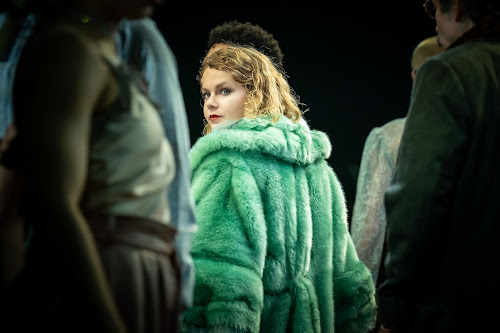
I feel so priveleged to have seen two actors play Herr Schultz. The first outing, he was played by André Refig, who usually plays Max and Herman. I loved the warmth he brought to the character and it was in his scenes with Vivien Parry’s Fraulein Schneider that I found my heart warmed and broken in equal measure. The second time, Elliot Levey was back on duty. Now, I’ve been a fan of Elliot’s for nine years and like Amy, I’m always overjoyed to watch him work; but I took particular delight in the prospect of Cabaret because it was such a departure from everything else I’ve seen him do, onstage and screen. The second I saw his character portrait I thought: “he’s going to break me” and of course he did, but I wouldn’t have changed the experience for the world. Elliot’s portrayal was so quietly tender and sincere, and heartbreaking though Herr Schultz’s arc is given the context and knowing the atrocities that took place historically, I found his relentless optimism very moving; it’s incredibly human to want to see the best in people and hope for the best.
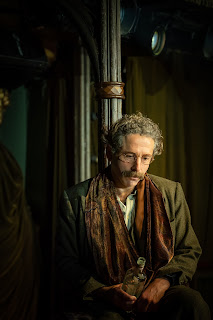
Richard Katz has since taken over in the role and I hope to get along for a third visit to see what he brings.
Vivien Parry radiates warmth and charisma as Fraulein Schneider, and as with Amy’s take on Sally I feel like I connected infinetely more with the character than I have before, and I count her renditions, particularly of “What Would You Do?” among my personal highlights of both afternoons. Wether she was playing opposite André or Elliot I was bowled over by the chemistry they created and the journey Vivien takes the character on. Nary before has a reaction to a pineapple filled with me with such pure joy and emotion!

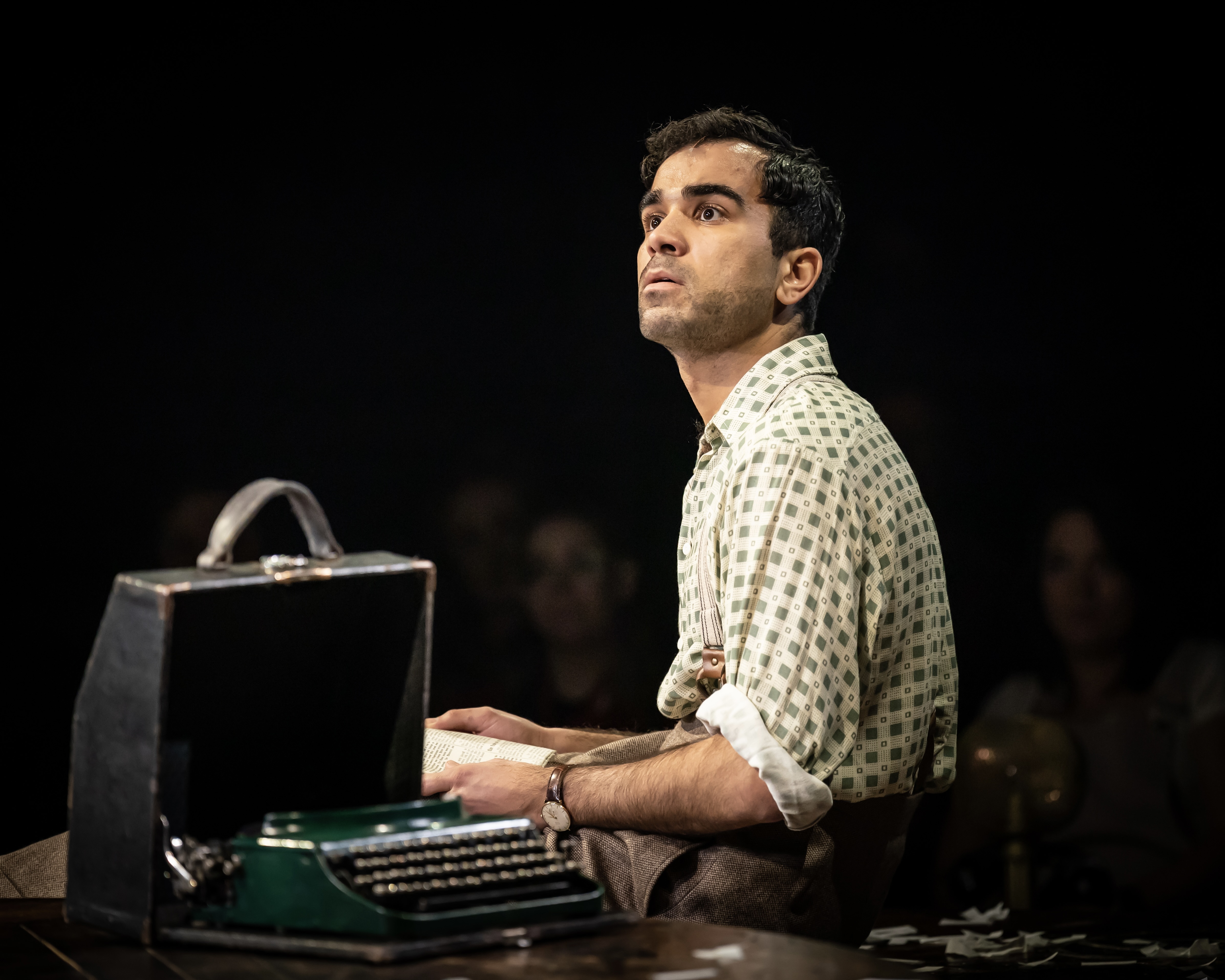
Omar Baroud brings a sweetness and vulnerability to Cliff that I hadn’t seen before that was so engaging; I found myself wanting to watch him even when he was just observing the other characters trying to guage what he was really thinking and feeling, and that’s a fascinating dynamic given when you realise that Cliff is essentially there as an observer and reactive.
Elsewhere, Stewart Clarke cuts a dark and formidable figure as Ernst Ludwig and the cast is rounded out by Anna Jane Casey, playing Fraulein Kost and Kit Kat Girl Fritzie, compelling in both guises. I’m overjoyed that this show has brought her back into my theatregoing life proper, I hadn’t seen her in a full, non concert performance since she was my original Mrs Wilkinson in Billy Elliot!
I’m a firm believer that all theatre you really enjoy stays with you – you can still recall it weeks and months later and thinking about it brings back the joy and intensity of feeling back that it’s almost like being back in the auditorium all over again. Thanks to this production, Cabaret has found a place in my heart and is still my favourite thing I’ve seen so far this year: beg, borrow or steal a ticket and experience it for yourself!


 Wheelie Stagey