
For the past 40 years, Oily Cart has been creating theatre to delight children and
their families, providing access to the arts they may not otherwise get. I was thrilled to be
contacted by the team to ask if I’d be interested in an interview with them on their recent
show A World Beneath Us, and their mission and ethos more broadly, especially as they are pioneers of a new theatrical form: sensory theatre.
Wanting to share my love of theatre with my nephews and niece as they’ve grown up, and
knowing that Oily Cart work with disabled creatives to further break down barriers to access,
I of course jumped at the chance!
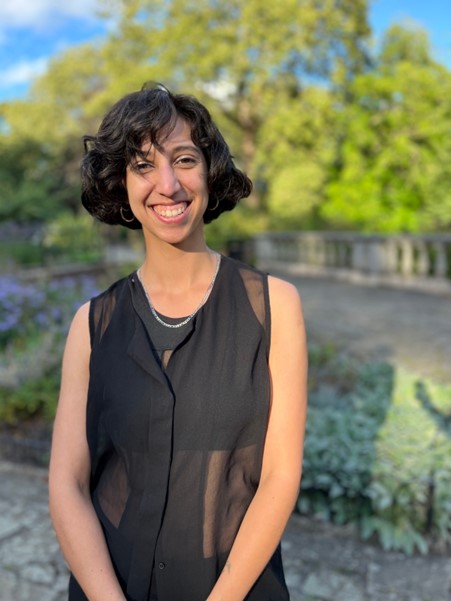
Here’s what happened when I interviewed Maka Marambio de la Fuente, Oily Cart’s Access & Wellbeing Officer…
For those who might be unfamiliar with Oily Cart’s mission and work – can you tell
me a little bit about the company and how it came to be?
“Oily Cart started out with three friends – Tim Webb, Max Reinhardt and Claire deLoon – coming together to create theatre for under-5s. The very first show was in 1981: an anarchic, political puppet show that, like our other earlyshows, was interactive, multi-sensory and musical. A few years later, a specialist school asked us to perform there: that chance invite set the company on a whole new path.
It was from seeing ‘hammocking’ at that school – delighted students being rocked and bounced in hammocks – that Tim, Max and Claire discovered the joys and potential of the kinaesthetic sense, the sense of movement. This sparked the inspiration for a whole new way of theatre-making – Sensory Theatre – that uses up to 33 senses. Since then, our shows have been performed on trampolines and in swimming pools, in hospitals and online, been delivered through the post and even taken audiences up in the air.
Each sensory experience we make is a space to be who you are and to be together: the magic happens somewhere between us. With each show, we fight for a world where theatre welcomes everyone.”
Your latest project, “A World Beneath Us” is touring this summer, tell me about the
piece and what can families expect from the experience?
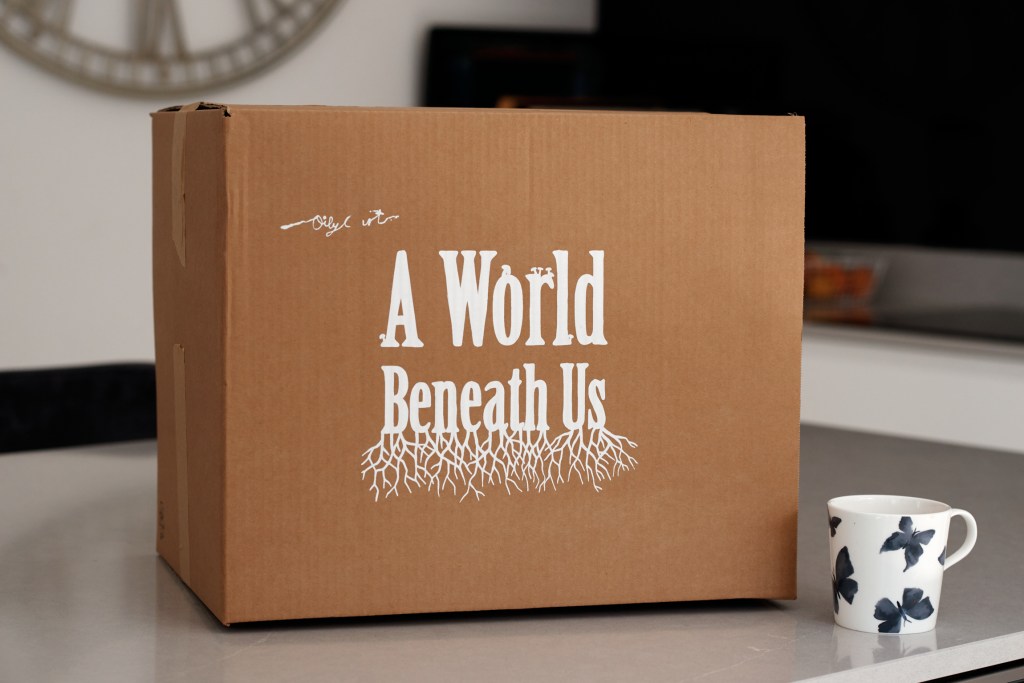
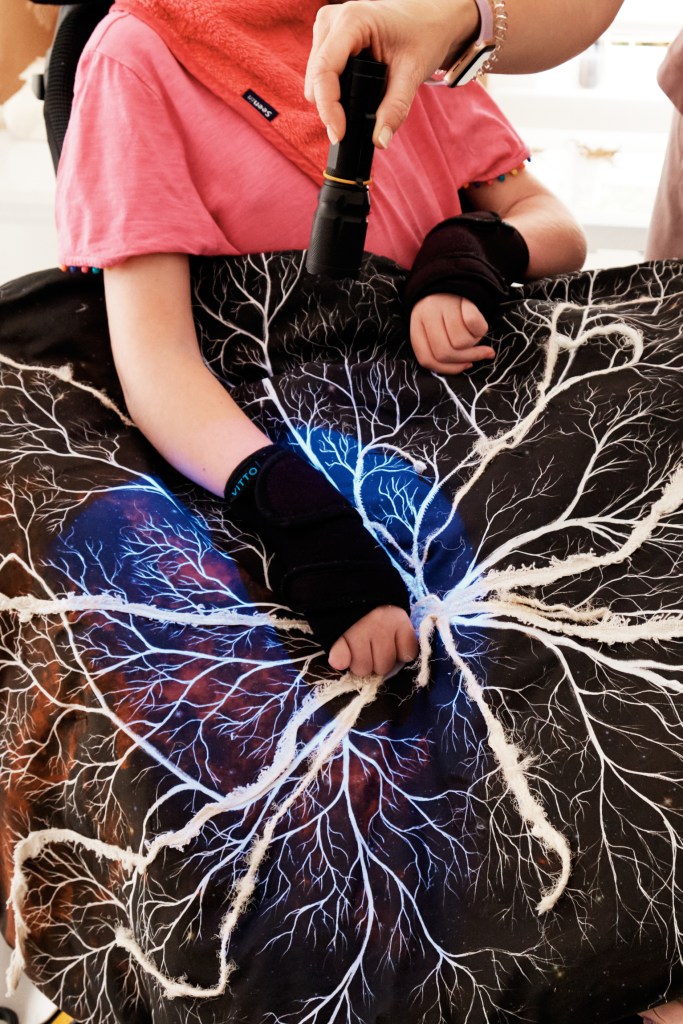
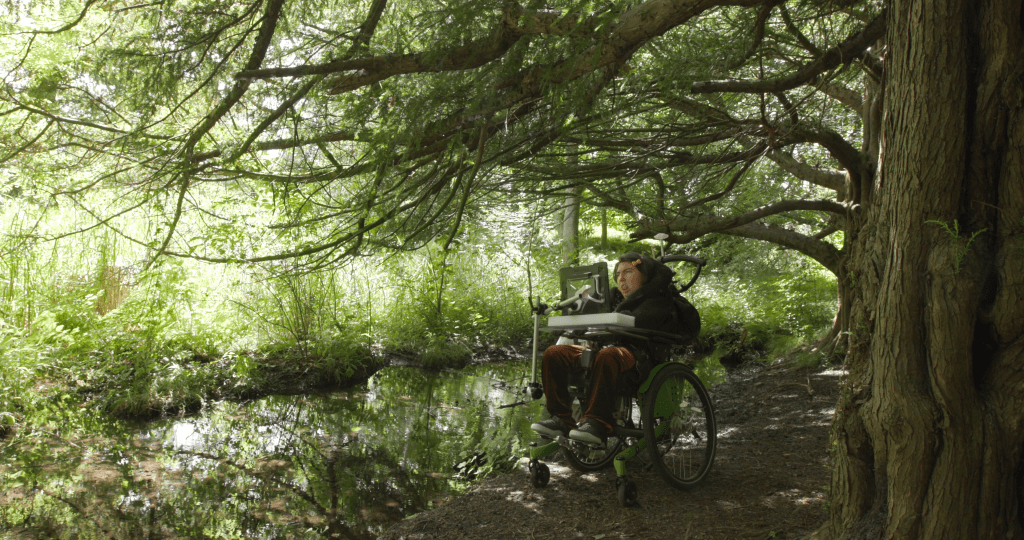
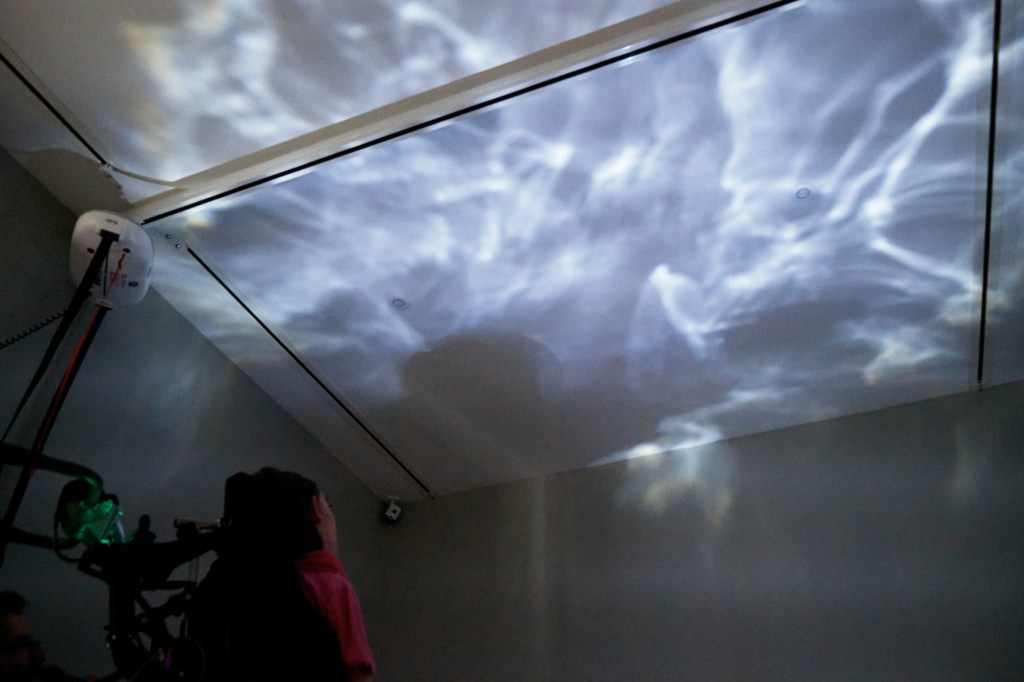
“A World Beneath Us is a new sensory show sent through the post. It has been created especially with and for disabled children who experience the most barriers, bringing the magic of theatre into homes across the UK for families to enjoy together. The show turns the audience’s attention to the invisible world beneath our feet: mycelium. Through a sensory film and accompanying sensory experiences, the show unearths these magical, underground networks to explore how, just by being, each person is an important part of an ecosystem, whether that is our neighbourhood, our school, or our family. We might not always see these connections from the outside, at times they might feel small, but they are strong, and the roots run deep.
We made a commitment to touring ‘at home’ shows after learning from the COVID-19 lockdowns that for many families, this is the only way they can experience theatre. A World Beneath Us is inspired by our live show When the World Turns, a collaboration with Polyglot Theatre (AUS). We put the same level of resource, craft, creativity, and rigour into this at-home experience as the live touring show, and we’re really excited to be sending it out into the world!”
I love that your work is sensory – how does the team go about shaping their work
and new ideas from that foundation: is it ideas first and you tie the senses in, or
senses first and the ideas develop from there; How did “A World Beneath Us” come
about?
“The senses are completely embedded in us as creative individuals and in our creative processes, which follow the form of our shows – they are responsive and flexible, embodied and intuitive. Through each new creative process, we explore new ways of listening with all our senses to young disabled people with radically different ways of being in the world, who share the lived experience of our audience. We find shared points of interest between the community of young people and the wider creative team, to discover the most interesting creative directions we can go in together.
By following our audience’s desire lines, we gradually develop the structure, format, and emotional themes of a show so it is relevant, accessible, and specifically celebrates their way of being in the world.
This thread connects Co-director Greta Chambers McMillan and Co-director Natalya Martin as a sensory facilitator, and like mycelium, on through all the other associates and freelancers who are involved in the project, as well as Oily Cart’s core team.”
Tying into that, I imagine sensory theatre is unique because it’s reactive, and can
take place in some pretty exciting places, especially in terms of potential for
movement?
“Exactly! And because it is reactive, we have had the privilege to perform in so many interesting places, from pools to schools, in big theatre venues and on trampolines, to what is to me one of the most important and exciting places: people’s homes.
A home is your most intimate place, where you are most yourself. The ‘outside world ’ can be very inaccessible and require a lot of planning and resources to engage with it; for disabled people who experience the most barriers to access, your house, your HOME, means a lot. We bring that deep, sensory show experience to families’ homes, so they can live it at their own pace, in the comfort of their own space and however many times they like.
Alongside disabled young people, circles of support and artists we collaborate with, we are creating ownership around sensory experiences for disabled children and their families in a really special way. At home, you are free to move, explore and be, which is exactly the kind of freedom we want.”
What would you say to people who are perhaps new to the idea of sensory theatre,
and are unsure whether to give it a go?
“For audiences new to Sensory Theatre, I would encourage them to take this small
leap of faith. The reason is very simple: because sensory experiences are like
speaking a language that is innate to everyone, not exclusive to some people.
Everyone feels! And in a world where we are ‘doing’ so much of the time, how
beautiful it is just to stop… and feel.
Sensory Theatre brings us back to our basics, stripping back conventional ways of
experiencing shows and interacting with other people. What’s left is a space that can
hold everyone, that encourages authentic human connection, and where we can feel
at ease.
For artists that are new to creating Sensory Theatre with audiences, I would say
welcome to the club! We are so excited that more and more companies and
creatives are exploring and experiencing with the senses. It’s a deeply rich,
interesting way of perceiving and making art, and connecting with our audiences
very differently from a traditional performance.”
Oily Cart prides themselves on ensuring young audiences/families who may face the
most barriers to attending and having access to theatre can do so, what’s the biggest
change you’d like to see in the industry, and how can your audiences help support
that vision?
“A change that we would love to see in the industry is Changing Place facilities in every venue. We hear so often from families that the lack of appropriate toilets is a massive barrier to meeting their basic access needs. There are lots of things venues and organisations can put in place – and many do! -to make theatre more accessible, like being step-free and accessible for different types of wheelchairs, sharing resources like content warnings and social stories in advance, and having a Quiet Space. Our hope is that these things become standard across the industry.
In terms of what audiences can do, we work hard to raise expectations of what accessible sensory performance work can be, which we hope in turn encourages families with disabled children to demand more from the cultural sector.”
Leading on from the above, there are some fabulous organisations out there such as
yourselves doing great work to make the arts industry a more equitable and
accessible landscape – we know that change and progress can be slow and
challenging- how do you stay resilient, and what advice would you give
organisations/creatives etc wanting to join you in that ethos, but who might not know
where to begin?
“In terms of advice, I think an essential thing is to start at home: to constantly be reviewing what we as an organisation can do to be more accessible and diverse ourselves, and to keep listening and learning. Central to this and all areas of our work is the principle of Nothing About Us Without Us.
In recent years, we have moved from being a company that makes shows for young people to a company that creates with and for young people. This transition had a much wider impact on our practice, marking a more explicit shift from ‘doing to’ to ‘being with’, for instance, which we released a report about recently. It also affects how we understand our advocacy, our creative processes, and how we are impacted and influenced by young disabled people in all areas of the organisation.
Thinking about how we stay resilient – as you say, we are really lucky to work alongside and be in conversation with incredible organisations and people, like Daryl &Co, Graeae, and Touretteshero, to name just a few. We really benefit from the connection and energy that this extraordinary sector of the arts industry generates. There’s also such a joy seeing the end product of a show like A World Beneath Us and celebrating the talent of the incredible disabled artists we get to work with, like co-director Greta Chambers McMillan.
I also think it’s important to understand how different contexts shape how changeand progress happen. Something that has helped me personally to stay resilient in the context of austerity, for example, which has disproportionately impacted disabled and neurodivergent people, is to know that we are not alone. We are a small part of a much larger, long-term push towards change, one that has shown it’s possible to find a way to keep going, and so that gives hope.”
What do you hope audiences take away when they experience “A World Beneath
Us”?
“A World Beneath Us is a sensory show that we hope gives space to families to explore and celebrate the networks they are part of, whether that’s family, friends, school, and the really important part that each individual plays in the strength and wellbeing of these ecosystems.
Ultimately, the takeaway for each family will be different, and that’s the beauty of an At Home show. A World Beneath Us doesn’t impose a story on its audience but mirrors families’ own experiences back to them. The box that arrives on your doorstep is the beginning of a journey. It can stay in your home, it can change, it can be repurposed, or stay just as it is, but it’s yours.”
Has developing this piece surprised you/taught you anything new or something you’ll
take forward in future projects/life?
More time! A World Beneath Us brings people who experience the most barriers to access to the forefront of both the show’s creation and the main audience. We structured the schedule from an access perspective to build in plenty of extra time, but in reality, we needed even more.
What is so beautiful about A World Beneath Us is it does give families that flexibility and space. They decide when to do the experiences and how long they will take; it could be 2 hours, it could be two days, whatever works for them.”
Any plans on the horizon for Oily Cart you can/would like to share, after “A World
Beneath Us?”
“Absolutely! As I mentioned, A World Beneath Us is inspired by our collaboration with Polyglot Theatre (Australia), When the World Turns. We’re so excited that we will be touring the show, which has been made for and with disabled young people who experience the most barriers to access, to venues across the UK in Feb – March 2025. There will also be a version of the show for babies (aged 0-12 months), called Great Big Tiny World, touring alongside it.”
Keep up with Oily Cart on their social media channels:
 Wheelie Stagey