
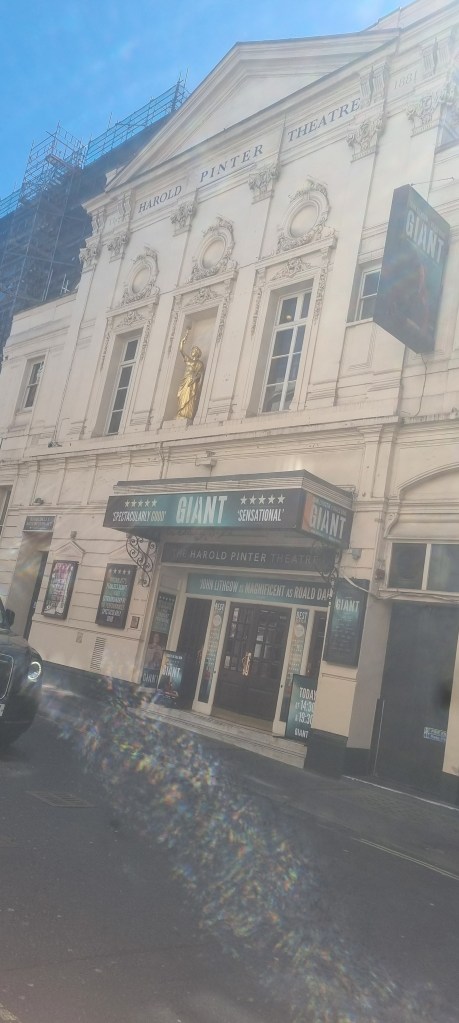
2024 was a really interesting year for me as a theatregoer, I pushed myself to see more things that were new to me, and just break away from those “comfort” shows of mine a little bit, broaden my horizons. Part of that meant last year I saw a few more plays than I might normally, one such being Mark Rosenblatt’s debut, Giant, in what was my first experience of the Royal Court theatre. Now alas, that first visit ended up being memorable for all the wrong reasons (if you want to hear that whole story, look out for the podcast on the show in coming weeks), suffice to say for now that I’m glad my tendency to book a repeat viewing if actors I know and love are involved kicked in, because it was easily one of my favourite pieces of theatre I saw last year. As always a little part of me questions why I just didn’t write this at that time, but on the back of its triple Olivier success this year (Best Actor for John Lithgow, Best Actor in a Supporting Role for Elliot Levey, and Best New Play) and having now seen it in a new space, I felt it might make for more thoughtful, insightful reading….
“You understand the power of language better than anyone! How it can twist things out of shape, and how it can make them whole again.”
It’s the summer of 1983, and beloved children’s author Roald Dahl is priming his latest novel, The Witches, for publication. At the same time, he has published a book review that sent shockwaves through the world for its rife antisemitism, and his publishers on both sides of the Atlantic converge upon Gipsy House, Dahl’s Buckinghamshire home, to convince him to apologise, dreading a sales downturn. Here begins a fiercely compelling battle of wills.
As a 90’s child, the incident that this play is built around was before my time, and coming to it as someone who enjoyed Dahl’s work growing up (my favourites are Danny, Champion of the World, Charlie and the Chocolate Factory and The BFG) without that frame of reference was quite the eye opener. Looking at it through the lens of knowledge I have now (the new editions of his works given the changing sensibilities in modern times, the statement issued by his family and the Roald Dahl Story Company in 2020 apologising for two particular interviews and the antisemitism therein, and of course simply living in the world we do today) makes it a provocative and uncomfortable watch at times (particularly hearing the review quoted, and another interview Dahl gives verbatim), but nonetheless richly rewarding. Personally, I really gravitate towards art that does this: forces me to sit up and reflect more deeply, educates me, or challenges the way I look at the world. Giant does all three of these in spades, but the real gift in Rosenblatt’s words is this ability he has to blend this intensity with wit. One of the things I was most struck by at the weekend was, as someone who had already seen the play prior to the West End transfer, was the vast contrast in the reaction between my audiences. There was much more of an unbridled reaction to the humour within my crowd at the Pinter whereas my Royal Court audience shared a more rapt silence punctuated by nervous “should I really be laughing at this?” type momentum. Both have a place here in my opinion; that communal gasp of horror when Dahl calls his publisher Tom Maschler a “House Jew” will stay with me just as strongly as the knowing laughter at some of the references in that West End house. It’s testament to the quality of the writing that it can illicit such intensity of both atmospheres, and I hope Rosenblatt’s future writing work (this is his debut) continues in that direction, and remains unafraid to keep an audience on their toes like that.
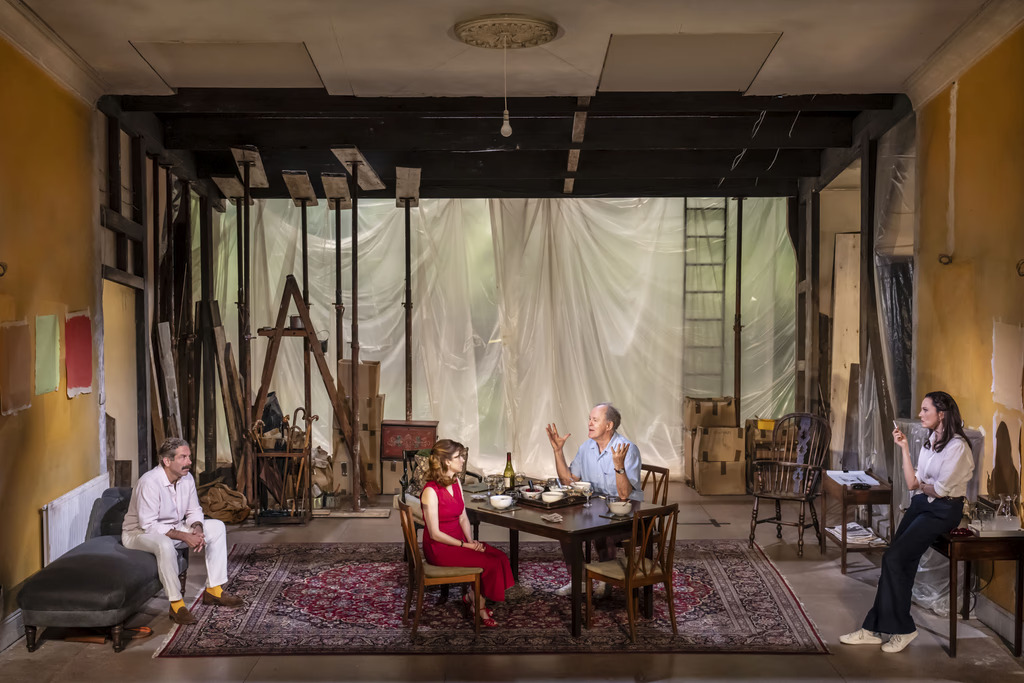
This is my third experience of theatre directed by Nicholas Hytner, and I am in awe of how well he has aligned with Rosenblatt’s words; everything is so well balanced and pitched to perfection. You’re always aware of the tension, especially in Act One as Dahl “warms” to his theme and says, unashamedly, precisely what he wants to say, not what those around him expect, and whilst that comes to a head, Act Two finds us sitting with the fallout of everything we’ve just seen. It feels slower in pace, as we as the audience, and the other characters grapple with the weight of Dahl’s words. No expression or gesture, however subtle, is wasted and it’s often a sheer joy watching the nuanced expression and body language as much as it is hearing the words being said. We get a truly magical trio when we factor in the design by Bob Crowley – capturing Gipsy House in all it’s mid renovation glory – the walls and ceilings are stripped, boxes and ladders pile up, builders sheets protect the garden exit, somehow it feels just as reflective of the sense of friction and chaos that unfolds through the play, and to see the writing, design and direction work in such harmony and commitment to the shared vision is a pleasure. When everything from that perspective is of such quality, what you need is a cast that will hold onto that clarity of vision, and lift it even further with their delivery and understanding, and though they be a “little” cast (six in all) they are fierce and an utter privilege to watch work.
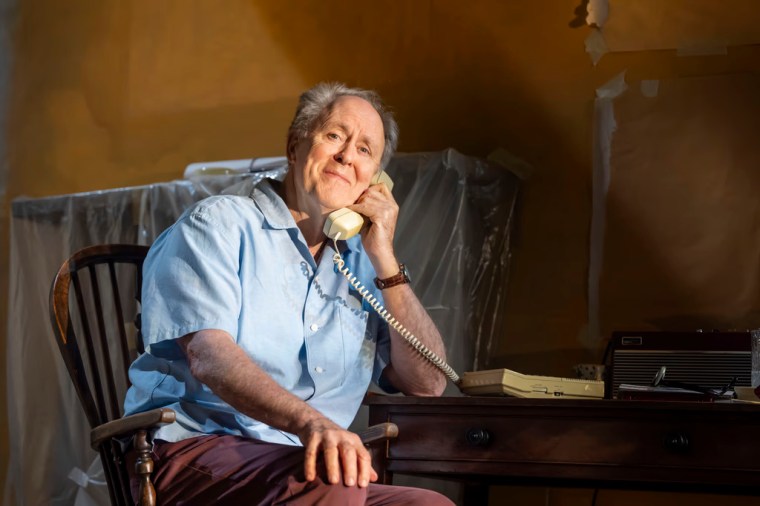
A work of fiction rooted in fact, there’s power in the way Rosenblatt has written Dahl, in all his complex, troubling nuance. There is delight in his charm, wit and sarcasm, but as we spend more time in his presence, the more the vitriol creeps in, and as uncomfortable as reconciling those different facets gets, it makes one heck of an entertaining study, brought to immense, captivating life by John Lithgow. As written here, Dahl struck me as being all the more unsettling not just because of what he says, but because he is fully aware of how people will react to it; trying to control the room and yet teasing us with snatches of warmth and sincerity. His mood can change on a dime, and Lithgow throws himself into those nuances wholeheartedly, and with such remarkable precision that it elevates the piece even further.
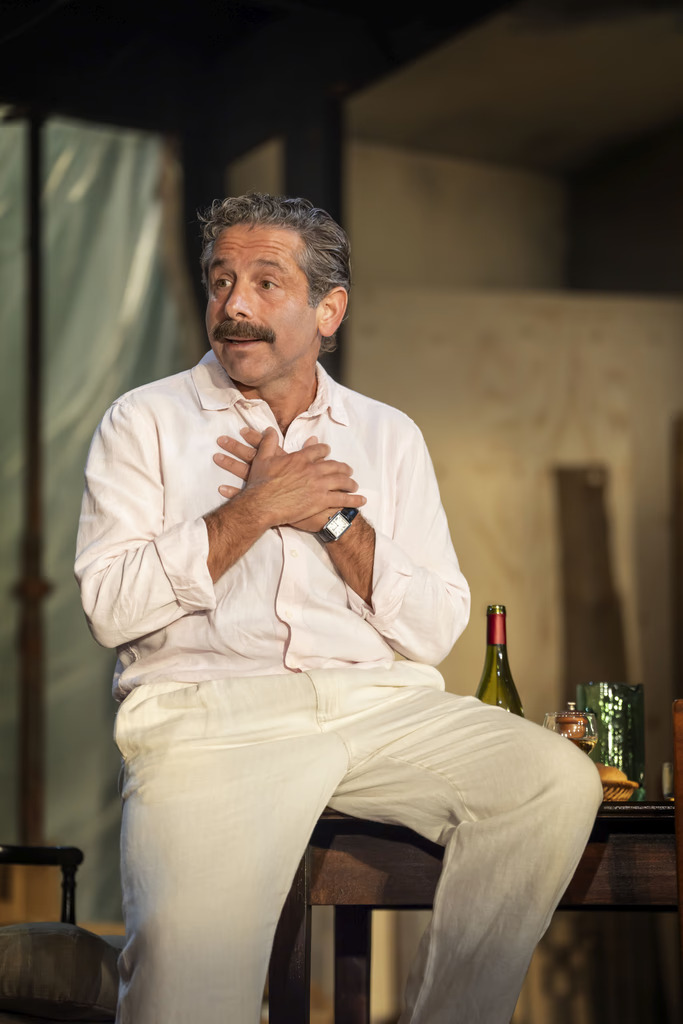
The same goes for Elliot Levey – this is the sixth production I’ve seen him in, and once more I took such joy in witnessing the subtle wit and emotional nuance I love so dearly about and associate with his work. Tom Maschler cuts a compelling figure in this context, given that he’s careful not to commit to a “side” too firmly in the proceedings, always trying to push for the bigger picture. Yet, there’s perhaps some internalised antisemitism within, given his experiences (he alludes to how he was treated at school, how tiresome he finds it when other people expect him to “know”, and so on) that makes his tendency to sidestep and sit on the sidelines so engaging. It’s potent how one gets a true glimpse of what Maschler might actually be feeling only when Roald is offstage. There’s an exchange between him and Jessie Stone that teeters on getting just as heated as the rest of the play does. Still, Elliot dials it back beautifully where Maschler says: “books are how we grow up, how we first navigate the world, learn to live, become vaguely functioning adults. And this man, he deserves criticism for what he’s said, sure… but in his books he picks a glorious playful path through the chaos of childhood… and the more kids feel guided by his books, the more boldly they’ll read as adults, and rise above the narrow crap their parents told them to sit with braver minds in richer worlds“. To be confronted with that question of separating the art from the artist with words that resonate so strongly with me and my love of reading was quite something (both challenging and moving), and it’s being in the hands of an actor I admire so will be one of my defining memories of this play. Having a better vantage point from the dress circle here compared to the back of the stalls in the Royal Court allowed me to appreciate the physicality of Elliot’s performance, too; he’s a master of the subtle glare, and often infinitely expressive even when he’s not speaking.
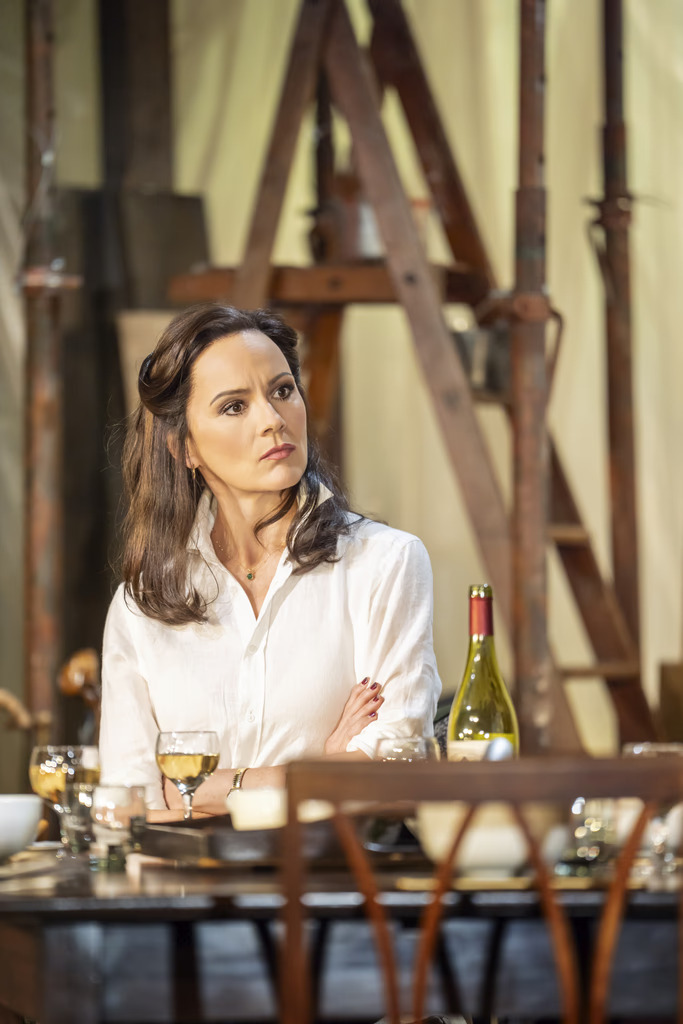
As we’ve said already, Giant is fiction rooted in fact, and Rosenblatt’s work gives us the fictional character of Jessie Stone, Maschler’s counterpart at Dahl’s (very real) American publisher: Farrar, Straus and Giroux. I believe the character is supposed to be a composite, representing the outcry against Dahl’s entrenched antisemitism, giving the community a voice. There’s a joyful irony in the fact that, for a character created entirely for that purpose dramatically, she has some of the most palpable, believable and deeply felt scenes in the whole play. I have had the pleasure of seeing Romola Garai originate the role, and now the baton has been passed to Aya Cash, making her West End debut. What I loved most was how different their interpretation of the role is. I found Aya’s take to be much more fiery from the outset compared to Romola’s, much less subtle in how she reacts to Dahl and the way Tom and Dahl’s fiancée Felicity “manage” him. For me, that totally changed the energy in the room and the dynamics between these characters in the best possible way, and to watch Aya, whom I wasn’t familiar with, in amongst these faces and words I was holding her own and navigating her arc with such passion and vulnerability was a delight.

Rachael Stirling shines as Felicity Crosland, Dahl’s mistress turned fiancée. She cajoles, intercedes and referees with shots of wonderful humour, always trying to champion Dahl’s humanity, not showing one iota of concern for the business crux of the matter that so preoccupies Tom & Jessie. She loves Dahl deeply and you can tell this so abundantly throughout. There’s a sadness to that, arguably given how the play might feel unresolved, but she, like John, leans into all the strength of emotions and complexities we see, and the result is so nuanced and sophisticated.
Though both perhaps underused, Tessa Bonham Jones & Richard Hope make the most of their scant stage time, bringing much needed light relief to proceedings as Hallie and Wally, staff in the Dahl household. Tessa is a scene stealing joy as Hallie, full of bubbly, endearing warmth and energy. Hallie’s relationship with Dahl is a striking one, as it hits lots of different emotional notes as the action goes on and to watch Tessa’s awareness of that complexity was really powerful, equally amusing and moving.
Though a minor exchange in the play’s grand scheme, the conversation between Dahl and Wally stood out to me more in this second viewing, because it shows not only Dahl’s chilling self-awareness, but also the idea that he enjoys flattery. There’s a frustration with Wally in the sense that he panders to Dahl’s behaviour (“you never bent to noone afore, and ‘at din’t turn out bad, did it?” ) but in that very same scene, there’s tenderness as we see two friends joking and reminiscing. It’s a whole raft of emotion and nuance in the space of a few minutes, and Richard brims with warmth and charm.
For me, Giant’s strength lies in its ability to tread a fine line so beautifully. It’s timely and doesn’t shy away from difficult questions, but it’s the balance that tempers it so well: those complex characters with all their nuances, for good and ill, alongside moments of warmth and wit, that make it such a powerful, compelling piece of theatre.
Giant runs at The Harold Pinter until August 2nd, 2025
Production Photography: Johan Persson
 Wheelie Stagey