
If you ask me who my favourite composers are, Rodgers and Hammerstein are always up there. Carousel is my favourite, but there are some pieces amongst their body of work that I’m less familiar with, South Pacific being one of them until very recently, when I finally saw the 1958 film version.
Originally premiering on Broadway in 1949 where it ran for 1,925 performances, South Pacific is based on the Pulitzer prize winning novel “Tales of The South Pacific” by James A. Michener and combining elements from all of those stories, the show is set during World War II, where American nurse Ensign Nellie Forbush finds herself falling in love with Emile de Becque, an older expatriate French plantation owner, but struggles to accept his mixed race children, daughter Ngana and son Jerome. There’s a secondary plot involving a romance between Lieutenant Joseph Cable and a young Tokinese woman named Liat, and various colourful characters including Bloody Mary and Seabee Luther Billis help tie both threads together.
A confession to begin exploring what this particular production meant to me: I hated the film. I couldn’t warm to Nellie’s character, and as such found it hard to connect with and believe in her emotional arc, and thus the musical’s progressive message about racism and overcoming prejudice got lost in translation for me. It’s also firmly of its time, and there’s lots of stereotypes at play, and because of my reaction to it, I chalked South Pacific up as my least favourite Rodgers & Hammerstein musical, despite it having some absolutely stunning songs! That in mind, what’s a surefire way to encourage me to give a show a chance? Cast one of my all favourite leading men, and mount it at one of my all time favourite theatres: Chichester Festival!
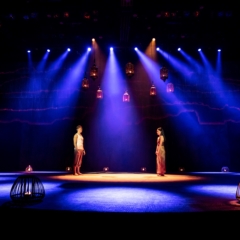
I adore this space, and it’s always exciting to see how director Daniel Evans and the rest of the creative team breathe life into it; and boy did they do that incredibly well. There’s a blend of traditional and new orchestrations from Nigel Lilley, David Cullen & Theo Jamieson, under direction from Cat Beveridge that are beautifully played by the orchestra; I thoroughly enjoyed the blend and picking out all the repeated motifs: there’s a fine line between the luscious and darker, edgier elements that’s incredibly evocative and emotive. The lighting design from Howard Harrison is also hugely characterful- lots of bold, rich colours – the purple, blue and orange accents with lanterns for scenes on Bali H’ai between Cable and Liat were my favourites, and the video design: projections of cliffs and palm trees onto corrugated iron at the back of the stage, as well as a map on occasion from Gillian Tan is equally striking. Peter McKintosh’s set design gives a nice balance between big pieces and knowing when to strip back and let the choreography shine, working well on a revolving stage. Occasionally, sightlines are affected due to angles, particularly in certain scenes at Emile’s plantation, but generally there’s a sense of energy and pace that suits the production well.
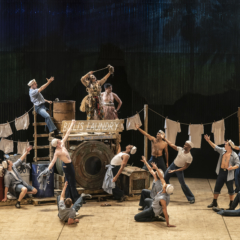
Speaking of choreography, Ann Yee imbues the piece with tremendous energy, sensuality and danger all in one. The ensemble numbers, especially Nothing Like A Dame, see our troop of Seabees lamenting their lonesome state, and it feels deliciously macho and threatening, a far cry from the preconceptions I had about this number! The quality of movement also does Liat’s character a better service here: ballet dancer Sera Maehara has her own manner of expression through dance that is both tender and moving, especially at the top of the show where Liat dances solo, graceful and joyfully, before the forces descend from above. This creativity also served Liat’s relationship with Cable well: their dance together added another layer of emotion and intensity that I’d been missing before.
Daniel Evans’ direction helped me to find the humour and warmth in this piece without losing sight of its progressive message, and it feels incredibly timely and relevant for a piece seen as controversial given the way it handles the theme of racism. I had been longing for that, and am glad I found it. With such delightful production design, I had such strong hopes of an equally strong cast: and boy did they deliver on that score!
This production double cast Nellie as Gina Beck is expecting her second child, and for both performances I attended in person I had the honour of seeing Alex Young in the role. I spoke earlier about how I failed utterly to warm to Nellie in the film, and Alex took that and flipped it on its head. In her hands, I found Nellie to be incredibly sweet and just the right amount of sassy, but more importantly I was invested and was rooting for her to grow and change, which I think on reflection is the point where her character is concerned – I don’t like some of what she says and does but I like her, that’s such an interesting journey to be taken on and her chemistry with Julian Ovenden’s Emile was hugely palpable and meant a smile was never far from my lips.
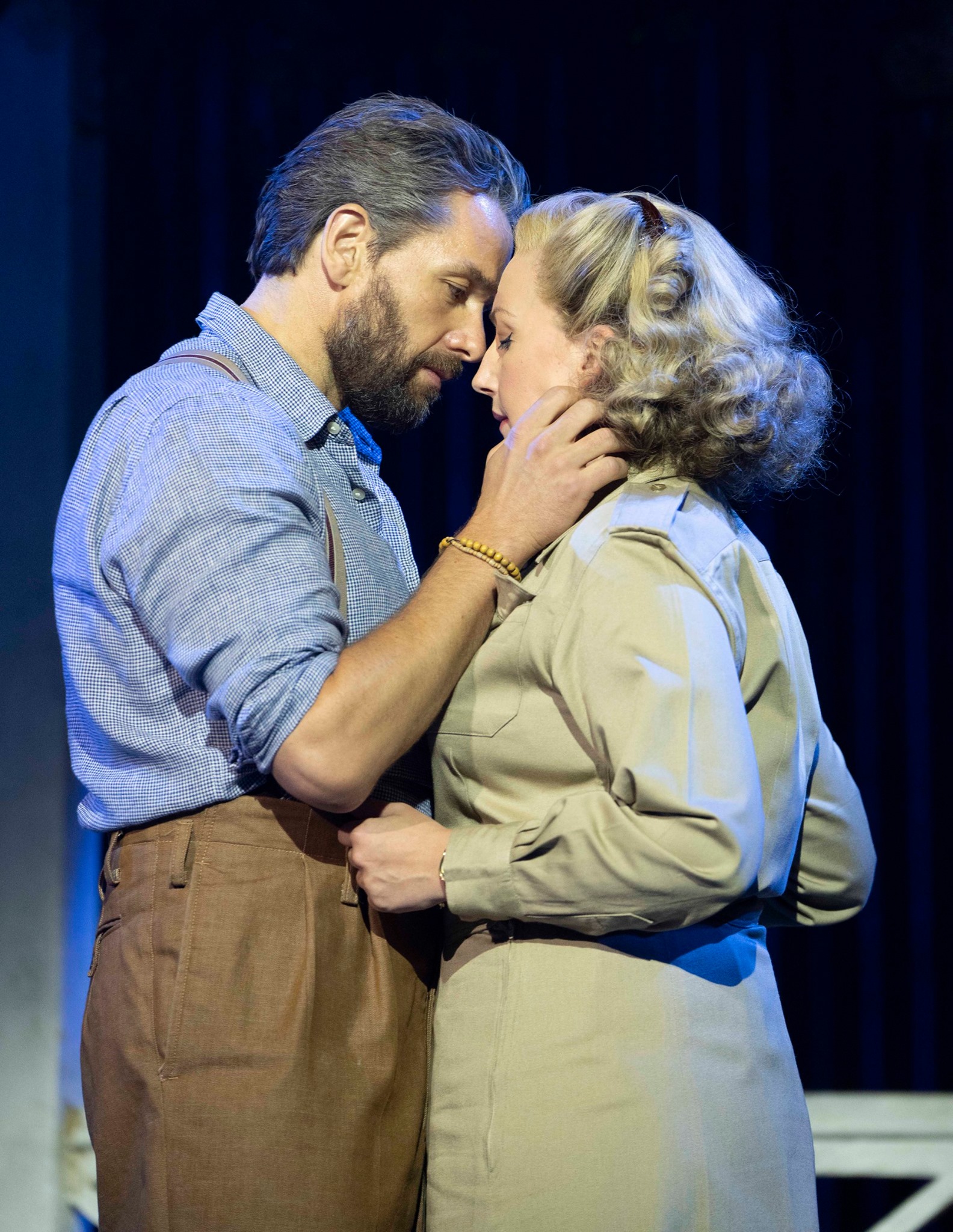
In the nine years to date I’ve been a fan of Julian Ovenden, I’ve seen him in three plays, and this marks my second musical. It’s been a huge bucket list dream of mine to be in the same room when he sings a Rodgers & Hammerstein score, and what a show for it to be; it was everything I ever dreamed it would be and so much more. His take on Emile is so warm and sincere, but shot through with wonderful moments of silliness and humour alongside the romance, so once again the character felt better judged and well rounded. Vocally too, I think Julian has a wonderful gift for interpreting lyrics and storytelling, and an old school score like this suits his rich, warm tone down to the ground; in particular This Nearly Was Mine quite took my breath away!
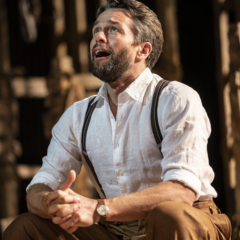
Rob Houchen cuts a charismatic figure as Lt Joseph Cable, and helped me understand the character and what drives him so much better now. I enjoyed his dry wit and deadpan humour very much, and it was a treat to see him in a role with more depth than Marius. His rendition of You’ve Got To Be Carefully Taught perfectly nailed the anger and bitterness he has when he reflects on the weight his upbringing has given to the choices he makes. Interestingly, I learned recently that there was originally much controversy surrounding the number and plenty of calls for it to be removed, but the duo stuck to their belief that it should remain, even if that meant the show would flop. Knowing that, and hearing the song with a more contemporary context made it all the more poignant and powerful!
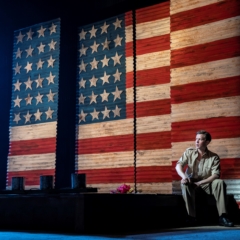
Joanna Ampil was smashing my preconceptions of her character Bloody Mary, left, right and centre and all for the better. Gone is the stereotype and the ‘comedy’ associated therein, and in its place is a darker, more calculated and conniving edge and complexity that I fell completely in love with.Nowhere is this more apparent than in Happy Talk, where new orchestrations and Joanna’s portrayal moved the song from sweet, light relief of film to desperation and longing as a mother tries to secure her daughter’s future. Commanding my attention and drawing my eye whenever she was onstage, Joanna is an absolute tour de force and I hope I have more opportunities to see her perform in future.
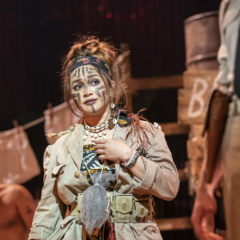
There’s delightful work too from Keir Charles as Luther Billis, whose comedic timing is second to none. Besotted by Nellie yet a bit of a man on the make, Billis’ character walks a fine line into potentially unlikeable territory, yet Keir balances the juxstaposition with an ease and aplomb that made him always endearing.
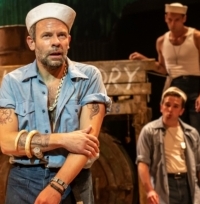
Central performances aside, this production has boasted one of the strongest ensembles I’ve had the pleasure of watching in recent years: the harmonies are a delight, the choreography tackled with such infectious enthusiasm, and more importantly I took away a sense of even the minor characters having strong personalites and presence, that’s a really special feat to accomplish.
I don’t usually like writing my thoughts on a production after closure as it so often feels redundant in my mind. This one though, I wanted to because it took my dislike of the piece, squished it flat and filled my heart full to the brim with love for it, and that’s huge thanks to everyone involved. What I want to know now is: will we, nay, when are we getting the West End transfer?

